
When two metals meet and an electrolyte joins them
Galvanic corrosion happens when two dissimilar metals are in electrical contact in the presence of an electrolyte (typically water, but any conductive fluid will do). The less noble metal becomes the anode, the more noble metal becomes the cathode, and current flows. The anode corrodes preferentially while the cathode is protected.
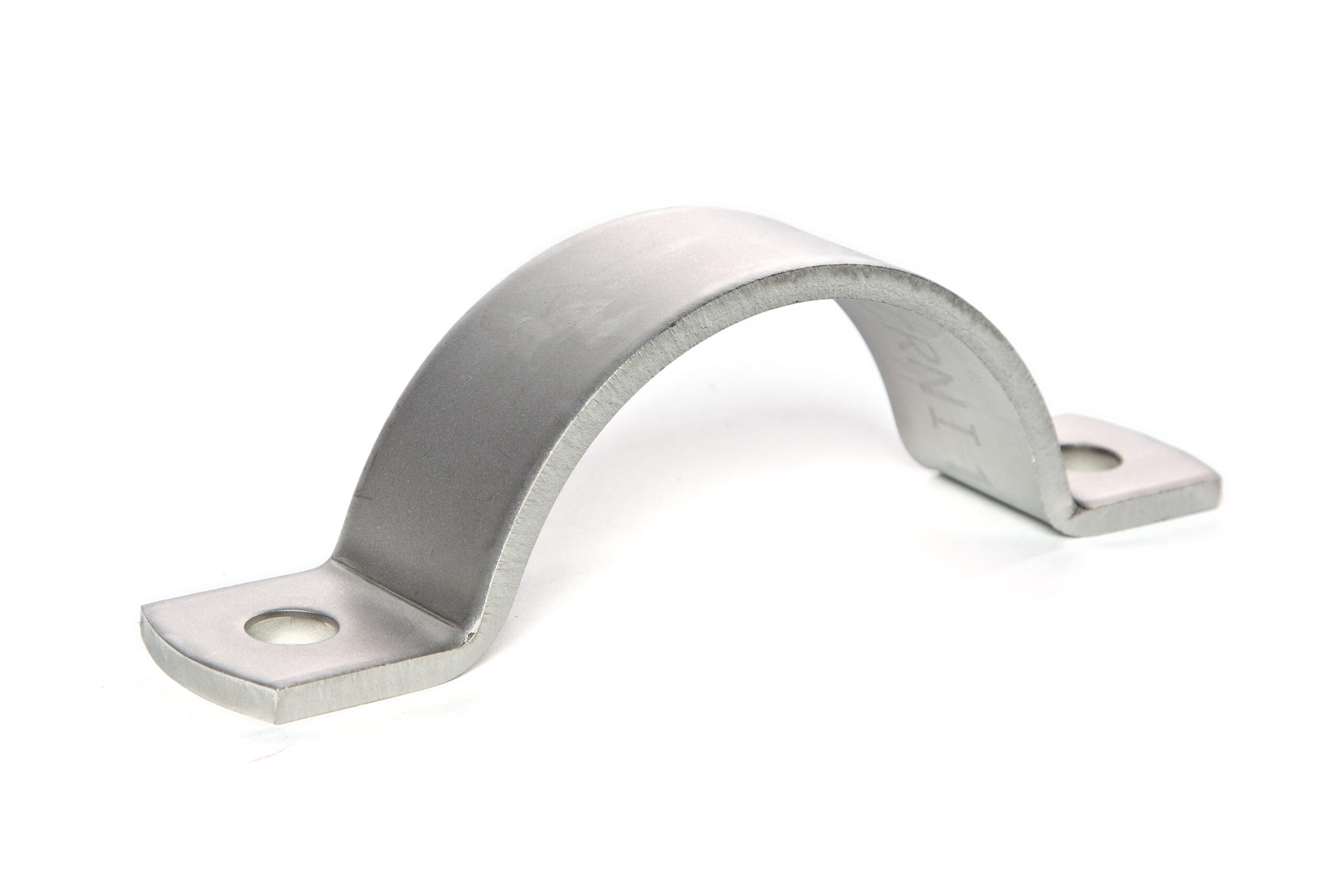
At the clamp-pipe interface this looks like: rust streaks on the clamp body even though the pipe is intact stainless, pitting along the contact line, or — in marine environments — visible green patina on copper components nearby.
This blog covers which combinations are safe, which are catastrophic, and what to do at the engineering stage to avoid the problem.
The galvanic series, simplified
From most noble (cathode) to least noble (anode) in seawater:
- Gold, platinum (rarely in pipe service)
- Stainless 316L (passivated)
- Stainless 304 (passivated)
- Nickel, copper, brass
- Tin, lead
- Iron, carbon steel
- Aluminium, galvanized steel
- Zinc, magnesium
The further apart two metals are on this series, the larger the driving voltage for galvanic corrosion. Galvanized steel against 316L stainless is one of the worst common combinations — about 0.85 V difference, enough to drive aggressive zinc loss in marine and chemical environments.
The four common failure modes
1. Galvanized clamp on stainless pipe. Result: zinc coating consumed within 6-18 months in any humid or chloride-exposed environment. Once zinc is gone, the underlying carbon steel rusts aggressively. Telltale sign: white-then-red staining at the clamp face.
2. Carbon steel fasteners on stainless clamps. Result: bolt heads rust, threads seize, replacement requires drilling out. Common on commodity-imported clamp sets where fastener spec is mixed.
3. Aluminium support beam under stainless clamp. Result: pitting at the beam-clamp contact, especially in marine installations. The aluminium loses ~0.1 mm per year under chloride attack.
4. 304 clamp on 316L pipe in chloride service. Result: pitting at the 304 clamping face, slowly, over 2-5 years. Not a true galvanic attack (both are passivated stainless) but a localised potential difference becomes significant in chloride-rich environments.
The engineering rules
To avoid galvanic corrosion:
- Match clamp body grade to pipe grade, or use a more-noble clamp on a less-noble pipe.
- Use A4-70 (austenitic stainless) fasteners on any stainless clamp — never carbon steel or galvanized.
- Isolate dissimilar metals with an insulating gasket or sleeve where matching grades is impractical.
- Keep moisture out of the clamp-pipe interface with a hygienic-design liner that fills the gap.
- Inspect contact faces at commissioning and again at 1 year for early-warning signs.
Insulation strategies
Where dissimilar metals must contact (e.g., titanium pipe on a stainless support beam), use:
- EPDM gaskets — 1.5-3 mm thick, ASTM A 380 chemically passivated edges.
- Phenolic spacers — for high-temperature applications (up to 180 °C).
- Insulating washers — A4-70 stainless bolts with EPDM washers between bolt head and clamp body, completing electrical isolation while maintaining mechanical clamping force.
NIBRO supplies insulation kits compatible with our standard clamp range — typical add-on cost €0.50-€2 per clamp.
The marine environment
Marine and offshore installations are the highest-risk environment for galvanic corrosion. The combination of salt water (low resistivity electrolyte), high humidity, and continuous wetting accelerates every mechanism.
For marine, follow these strictures:
- 316L minimum on all wetted and splash-zone parts.
- Duplex 1.4462 or super duplex on continuously immersed components.
- No carbon steel fasteners anywhere — even painted ones fail at the painted edge.
- Annual visual inspection with calliper measurement of corrosion depth on a sample basis.
Cost vs lifetime
Properly specified matched-grade clamp + fastener kits cost approximately 5-10% more than commodity mixed-grade equivalents. The lifetime extension in chloride service is 5-15× — payback within months.
For non-corrosive indoor service, mixed-grade savings are tempting, but document the limitation in the installation file so future maintenance teams understand why those clamps need replacement when the line is repurposed.
Conclusion
Galvanic corrosion is the most predictable failure mode in pipe support installations — and the most consistently mis-specified at the procurement stage. Match grades, use A4 fasteners, isolate where unavoidable, and inspect at 1 year. The engineering effort to get this right is one project review meeting; the cost of getting it wrong is one major retrofit campaign.
Take this article into your next project meeting
Download the full NIBRO-branded whitepaper PDF — printable, A4, with QR back-link.